Reading Overview
At Enfield Heights Academy, we teach reading through a carefully planned approach that builds children’s skills, confidence and enjoyment of books. Our provision brings together five connected areas: phonics, book talk, guided reading, whole-class reading and developing a love of reading.
Teaching matches children’s age and stage of development, helping them make steady progress as readers. Regular assessment helps teachers understand each child’s strengths, identify their next steps and provide additional support where needed.
Phonics
In Reception and Key Stage 1, children follow the structured Read Write Inc. (RWI) phonics programme. They learn to recognise sounds, blend them to read words and use their knowledge to support spelling.
Regular practice helps children read with increasing accuracy, fluency and confidence. Reading books matched to their phonics knowledge gives them opportunities to practise what they have learnt, both at school and at home.
Early Years – Book Talk
In the Early Years, we help children discover the pleasure of sharing and talking about books. Regular book talk sessions introduce stories, develop listening skills and help children learn new words beyond those they use in everyday conversation.
Children learn how books work, including how to hold them, turn the pages and follow text from left to right. They explore illustrations, discuss characters and share ideas about what might happen next.
Teachers use prompts such as “I wonder…” to encourage thoughtful discussion and help children explain their ideas in greater detail. Small-group sessions give children opportunities to speak, listen and learn from one another. In Reception, individual reading also supports each child’s progress.
Years 1–2 and Autumn Term Year 3 – Guided Reading
Guided reading gives children the opportunity to read in a small group with their teacher. Before reading, the teacher introduces the book, discusses its themes and explains unfamiliar vocabulary, using pictures where helpful.
Children then read quietly while the teacher listens to individual pupils, supports their reading and asks questions to check understanding. They learn practical strategies to tackle unfamiliar words and make sense of what they read.
Alongside these sessions, children complete activities that strengthen their reading skills. These may include phonics practice, comprehension tasks, putting story events in order or listening to audiobooks. Working with a partner also helps children share ideas and develop their understanding.
Key Stage 2 – Whole-Class Reading
In Key Stage 2, children explore a shared class text each half term. Where appropriate, books connect with other subjects, helping children deepen their knowledge across the curriculum.
Lessons develop a range of reading skills, including predicting events, asking questions, making connections, identifying clues, summarising information and explaining opinions using evidence from the text.
Teachers model ways to understand unfamiliar vocabulary. Children learn to look at parts of words, consider how a word is used in a sentence and use dictionaries to check meaning.
Support is adapted to help every child participate and make progress. This may include exploring vocabulary before a lesson, reading with a partner or adult, or additional teaching in a small group.
Developing a Love of Reading
We want children to see reading as an enjoyable part of everyday life. Through shared stories, independent reading and opportunities to talk about books, we help them discover their interests and develop their own reading preferences.
Access to a varied selection of books encourages children to explore different authors, subjects and genres. Reading activities and celebrations create opportunities to share recommendations, discover new stories and recognise children’s enthusiasm and progress.
By working closely with families, we encourage regular reading at home and help children build habits that will stay with them throughout their lives.
Reading Spine
Our Reading Spine is a carefully selected collection of books that children experience from Nursery to Year 6. Teachers share these texts with their classes, giving children regular opportunities to listen to and enjoy high-quality stories.
The collection introduces rich vocabulary, varied writing styles and stories set in different places and periods. It encourages children to explore unfamiliar ideas, discuss different perspectives and think more deeply about what they hear and read.
As children move through the school, these shared reading experiences build their confidence, understanding and ability to enjoy longer, more challenging texts. They also provide a strong foundation for reading at secondary school.
What is Read Write Inc.?
Read Write Inc. (RWI) is a structured phonics programme that teaches children how to recognise letter sounds and blend them to read words. It also develops spelling and helps children become more fluent readers.
Children are assessed regularly and taught in small groups matched to their stage of learning. Lessons are led by trained staff, with opportunities to revisit sounds and practise reading so that children build secure skills before moving on.
Phonics Screening Check
The Phonics Screening Check is a short national check taken by children in Year 1, usually in June. It helps teachers assess how well children can use their phonics knowledge to read unfamiliar words.
Children read 40 words aloud to a teacher in a familiar, one-to-one setting. The check includes 20 real words and 20 made-up words, sometimes called “alien” words. These made-up words show whether children can apply their knowledge of sounds rather than recognise a word from memory.
Children who do not meet the expected standard receive additional support and take the check again in Year 2.
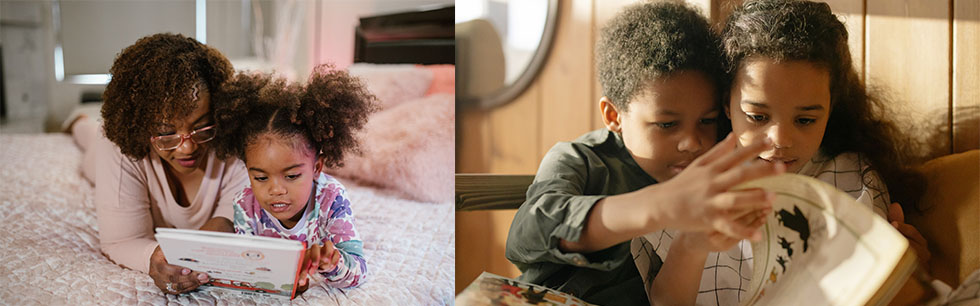
How to encourage your child to read more.
Here are some things you could do at home to help to encourage your child to read for pleasure.
Set a good example
Let your child know that you value books and all types of reading and make sure they see you reading: newspapers, poems, news items on websites, blogs, physical books, your e books on yourKindle.
Don’t stop reading to your child
Some children love being read to, even when they are older and become fluent readers themselves. Read in your own language; it will help your child understand as the languages are transferable.
Make time to read
Set some time aside for family reading, perhaps at bedtime. You could even switch off the wi-fi and put away game controllers after dinner! Reading helps everyone to relax and wind down from a busy day at school and at work.
Listen to your child read out loud
Reading aloud improves our memory of the words. So ask your child to read aloud. Maybe in the kitchen or in the car. They could even read to a sibling, a grandparent, family friend or carer. Some children even like to read to their pets!
Talk about reading
Share your views about books you have loved to read and also books that you have not enjoyed. Remember that reading is great fun – But that it is okay not to like a book!
Don’t just read books
Encourage your child to read in different formats: magazines, newspapers, comics, on the Internet, on a tablet or Kindle. Why not look at some book trailers together on YouTube to help choose their next book to read.
Let them read what they want
Don’t pressurise your children into reading what YOU think they should read. Reading is highly individual. The important thing is to get them reading.
Visit a bookshop
Take the family to a book shop. Spend some time browsing through the children’s section together. If your budget allows, choose a new book to buy. Alternatively, you could browse the children’s books on Amazon or visit your local library.
Encourage them to use both the school and local libraries
Visit libraries to find new books to read. They are free and easy to use.
Subscribe to a magazine of your child’s choice
Let your child choose a comic or magazine they really like and subscribe to it, if you are able to afford it. They’ll love receiving it in the post each month and will be more likely to read it if they chose it. A subscription makes a great birthday or Christmas gift.
Reading Resources
Early reading at Enfield Heights – Information for parents. See here.
How to support your child reading at home. See here.
Welcome to the Read Aloud Initiative at Our School!
About the Read Aloud Initiative
We believe that reading aloud is a powerful tool for nurturing young minds. Here’s what the Read Aloud Initiative is all about:
Building Strong Foundations: Reading aloud helps children develop crucial language and literacy skills from an early age. It enhances vocabulary, comprehension, and listening skills.
Fostering a Love for Books: We want to instill a passion for reading in our students. Through engaging stories and interactive sessions, we hope to make books their lifelong companions.
Creating a Bond: Reading aloud is a wonderful way for parents, guardians, and teachers to bond with children. It creates lasting memories and deepens relationships.
Why Read Aloud Matters
Boosts Academic Performance: Studies show that students who are read to regularly perform better in school. Reading aloud sets the foundation for academic success.
Enhances Imagination: Books take us to different worlds and ignite the imagination. Children who are read to are more creative and imaginative.
Improves Concentration: Listening to stories improves a child’s attention span, a valuable skill both in school and everyday life.
Builds Empathy: Through stories, children learn about different cultures, experiences, and perspectives, fostering empathy and understanding.
Get Involved
We invite parents, teachers, and students to get involved in our Read Aloud Campaign:
Read Aloud at Home: Spend quality time with your child by reading books together. It’s a bonding experience that they will cherish.
Volunteer: Details to be announced.
Book Donations: Help us build a diverse library for our students by donating books or funds to purchase new ones.
Resources:
Explore the following resources to make the most of the Read Aloud Initiative:
Reading List: Find a curated list of age-appropriate books for your child on our website when we relaunch Read Aloud in November.
Tips for Effective Read Aloud: Learn how to make your read-aloud sessions engaging and enjoyable for your child. New resources coming soon when we relaunch Read Aloud in November.
Join us in creating a community of avid readers through the Read Aloud Initiative.
Together, we can inspire a lifelong love for reading in our young learners.
Welcome to our dedicated space for parents and guardians who are passionate about fostering a love of reading in their children, both at home and beyond the classroom.
In today’s fast-paced, digital world, instilling a habit of reading in children can be challenging, yet it remains an invaluable skill for their personal and academic development. Here, you’ll find an array of resources, hints, and tips designed to help you navigate this journey with ease and enjoyment.
Our goal is to empower you with practical strategies and creative ideas to make reading a delightful and regular part of your family’s routine. From selecting the right books to creating engaging reading environments, we cover all aspects to make reading an adventure that your child looks forward to every day.
We believe that every child is unique, and our resources are tailored to meet diverse needs and interests, ensuring that there’s something for every young reader.
Join us as we explore the wonderful world of books, unlocking the magic of words and imagination.
Let’s turn the page together and embark on a journey that not only enhances reading skills but also builds a foundation for lifelong learning and curiosity.
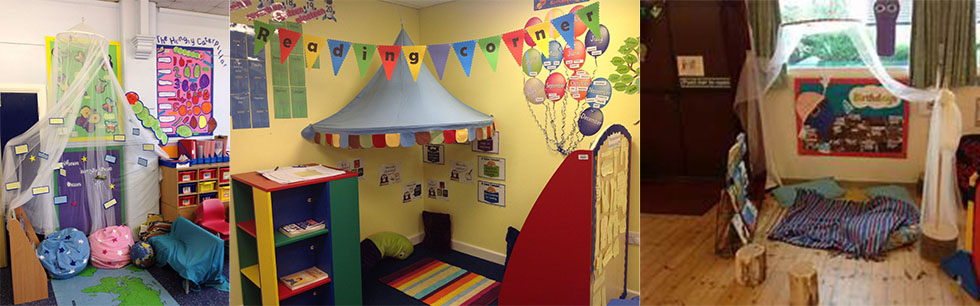
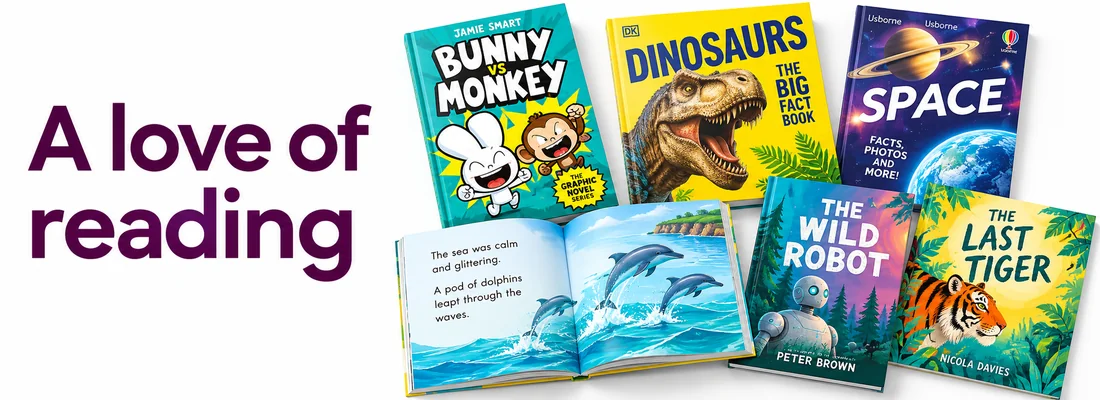
To promote a love of reading in the classroom, each classroom book area at Enfield Heights offers children a selection of texts aimed to both inspire and motivate reading. Reading books on display in each classroom book corner are updated and replenished regularly to ensure we offer a range of books related to current learning.
Reading Spine
Our Enfield Heights reading spine is used to promote a love of reading through class story times. We have a list of core storytime texts for each year group to be enjoyed during regular, timetabled storytime sessions. We aim to include a diverse range of texts set in the UK and around the world that reflect our diverse and unique Heights community.
To share what each class is reading, all classes proudly display the title of their current class reading book on their door. You can find out more about our reading spine here.
Reading Road Map
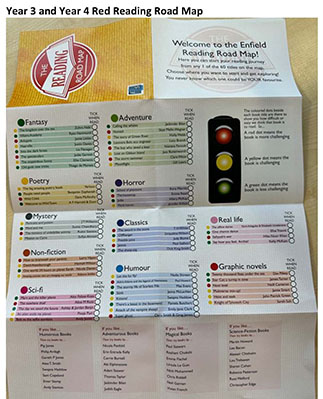
Reading Road Map is aimed at broadening the children’s reading horizons. It is allows children to explore different books, authors and share recommendations with their peers. All the titles on each map (other than the Classics genre) have been published within the last 12 months, and no author has more than 1 title per map.
How can it be used?
•Each book title also has a coloured dot to signify how challenging each book is. The challenging level key is explained on the map each child will receive to bring to and from home.
•Once a child has read a book, they can get it ticked off on their checklist by an adult at school.
•When children have read five books a bronze award will be awarded, ten books a silver certificate and twenty books children will be presented with a gold certificate. Once children have read more than twenty plus books, children will be awarded a special achievement certificate and a prize by the headteacher.
World Book Day
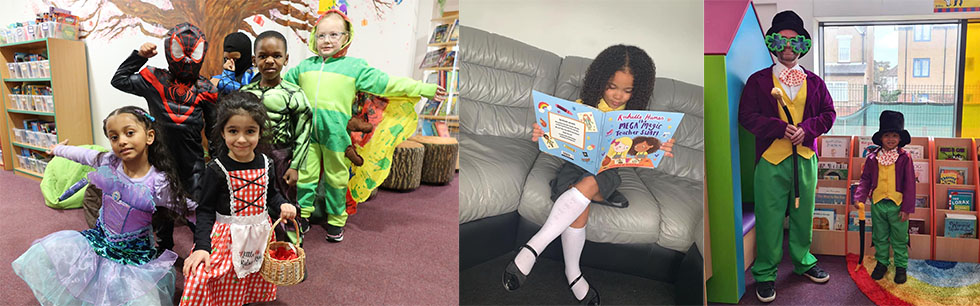
At Enfield Heights Academy, we love celebrating World Book day, giving the children the opportunity to dress up as their favourite book character and share their love of books. We also join in with other initiatives throughout the year related to reading and books – our aim will always encourage children to be hooked by books!